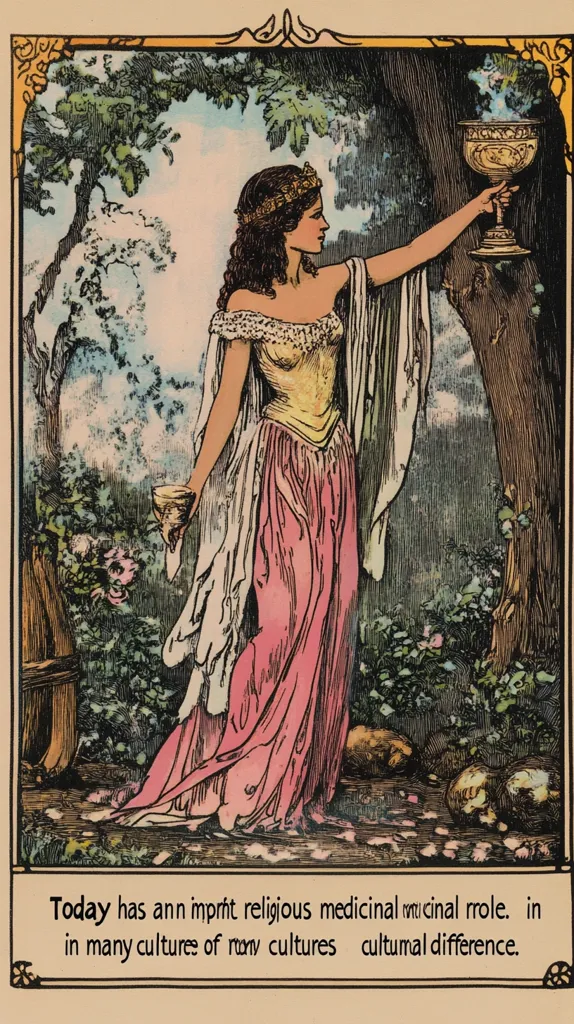
The image depicts a woman in a flowing pink gown, holding a chalice in her right hand and another cup in her left. She is standing in a lush forest, with a large tree behind her. The woman wears a crown and has long brown hair.  The scene is likely a depiction of a goddess or fairy. The text beneath the image suggests that the image is related to religious and medicinal practices in different cultures.
télécharger
The image shows a delicate, translucent green leaf with a intricate network of veins. It appears to be holding several white, pearlescent spheres, which are also slightly textured. The background is a soft, blurred white. The overall image evokes a sense of natural beauty and fragility.
A glass of pink smoothie sits in the center of a colorful explosion of fresh fruit.  Strawberries, cantaloupe, raspberries, and blueberries surround the glass, along with a scattering of seeds.  The background is a vibrant orange-pink.  The image is a celebration of fresh, vibrant flavors and textures.
The image shows a street scene at night with a large, faded, rectangular poster covering most of the right side of the picture. The poster is a pale pink and blue color with a grainy texture. On the left side of the poster, there are blurred lights from the city, cars, and buildings. The overall image is dark with a muted color palette. The texture of the poster suggests that it is old and faded.
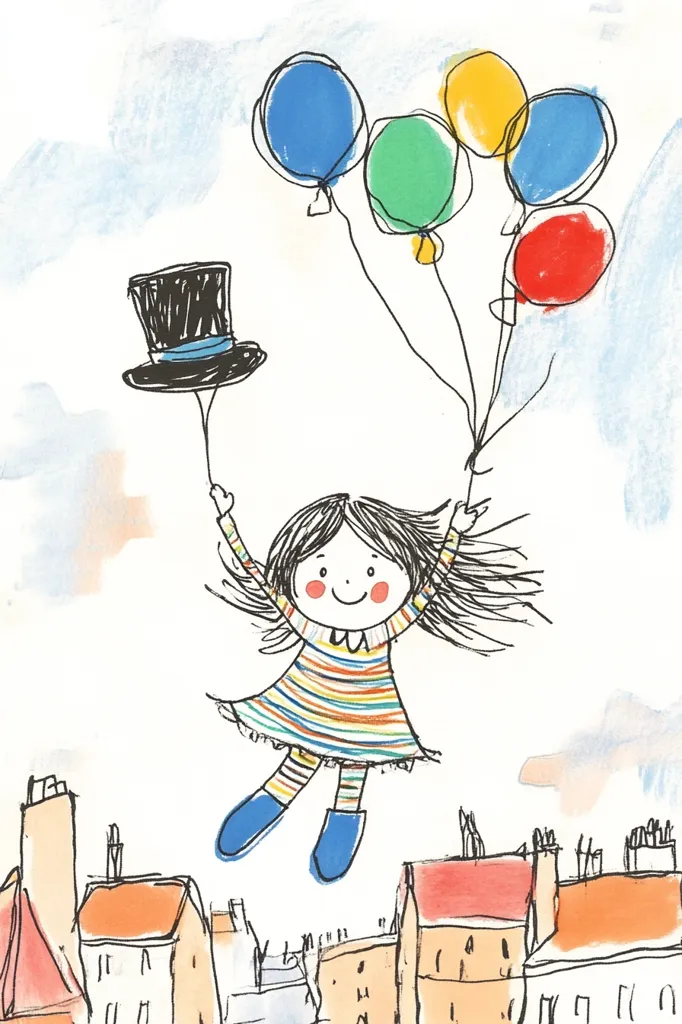
A cheerful girl with long hair is flying in the sky holding onto a bunch of colorful balloons. She is wearing a striped dress and a black top hat. She is smiling and looks happy. Below her are buildings with red roofs, suggesting she is flying over a city. The sky is light blue with a few fluffy clouds. The drawing is simple and playful.
The image shows a swimming pool inside a cave. The pool is surrounded by smooth, light-colored stone walls. The ceiling is a natural rock formation, with a rough and textured surface. Sunlight filters in through the open entrance of the cave, casting soft shadows on the walls. A few lounge chairs and a lamp are visible in the background, suggesting that this is a luxurious and relaxing space.
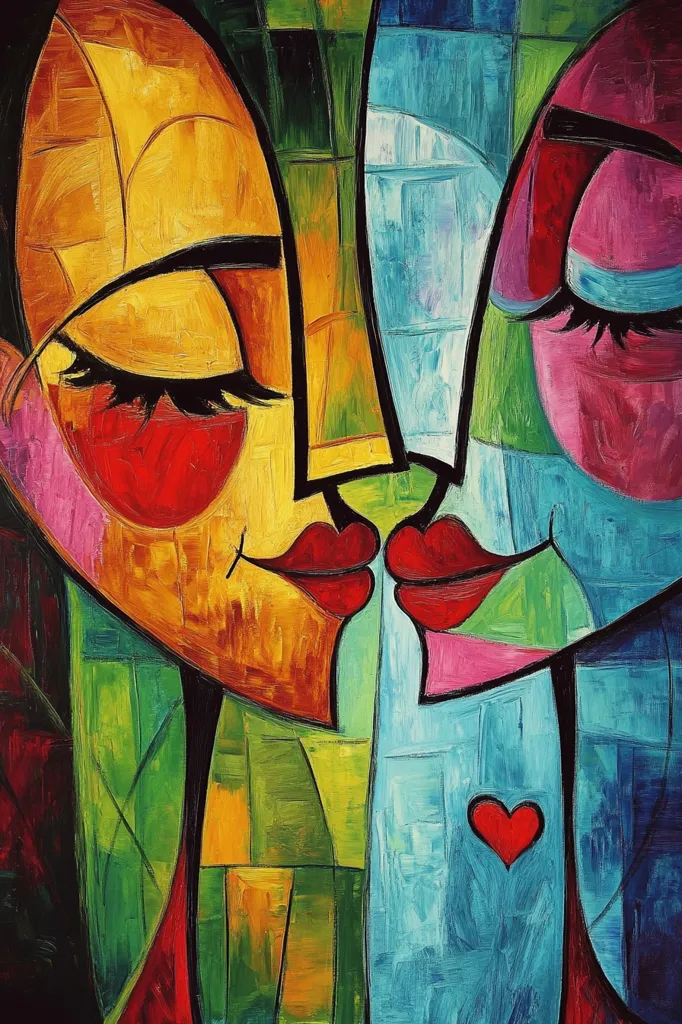
The painting depicts two faces, a male and a female, in a cubist style. The faces are painted in bold, vibrant colors, with contrasting shades of yellow, red, pink, green, and blue. Their lips are touching, suggesting a tender kiss. A red heart is painted in the bottom right corner, symbolizing love. The thick brushstrokes and abstract shapes create a dynamic and expressive piece. The painting evokes a sense of passion, intimacy, and unity.
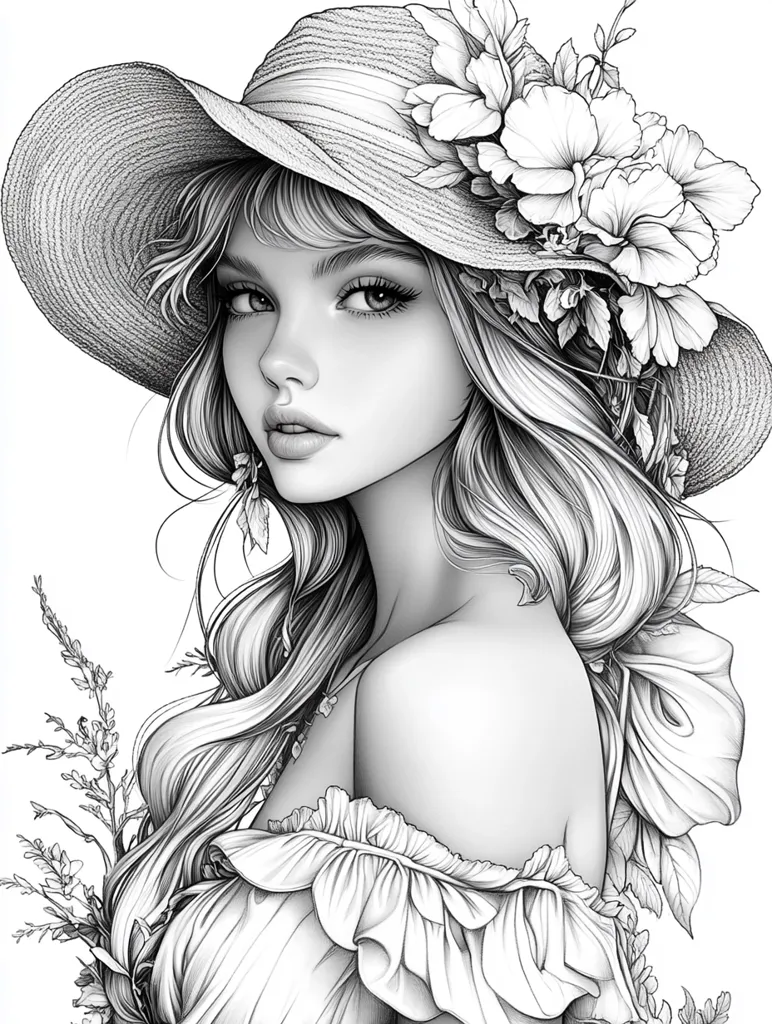
The image depicts a woman with long flowing hair, wearing a large sun hat adorned with flowers. The woman's gaze is directed towards the viewer, with her features drawn in a delicate and feminine style. The image is rendered in black and white, creating a sense of timeless beauty and elegance. Flowers and foliage surround the woman, adding to the ethereal and romantic atmosphere. The detailed lines and shading create a sense of depth and realism, highlighting the intricate details of the woman's dress, hair, and the floral embellishments.
A muscular, bearded man with long hair, dressed in leather armor, rests his arm around a woman with long brown hair. She is dressed in a loose, brown tunic and a red skirt. They are both sitting on a large, brown bear in a grassy clearing. The man looks down at the woman, while she looks slightly away. The bear's face is visible, and it appears to be calm. The background is blurry and shows trees and a bright sky.  The image evokes a sense of tranquility and closeness between the couple, with the bear acting as a symbol of strength and protection.
Créer
Modifier
titre Woman in pink gown, holding cups, in lush forest.
description The image depicts a woman in a flowing pink gown, holding a chalice in her right hand and another cup in her left. She is standing in a lush forest, with a large tree behind her. The woman wears a crown and has long brown hair. The scene is likely a depiction of a goddess or fairy. The text beneath the image suggests that the image is related to religious and medicinal practices in different cultures.
résolution 574x1024
créativité
aime 100
de Cliquez pour obtenir la source de image (816 x 1456)
Modèle Midjourneyv6
Ajustement fin
LoRA
prompts Magic is a belief, ritual or practice that is said to manipulate natural or supernatural forces. Typically, magic is categorized separately from both religion and science because of its different beliefs and practices. Ritual wand of the god of magic of ancient Greek mythology Circe, giving the cup to Odysseus People who practice magic are called magicians. Although meanings have varied from positive to negative many times throughout history, magic "today has an important religious and medicinal role in many cultures." In Western European culture, magic is tied to ideas of the other, alien and primitive, suggesting that it is "a powerful marker of cultural difference" and, as such, a non-modern phenomenon. In the late 19th and early 20th centuries, Western intellectuals saw the practice of witchcraft as a sign of a primitive mentality and also usually attributed it to marginal groups of people. In modern occultism and neopagan religions, many self-described witches regularly practice ritual magic. Definition of magic as a technique for creating change in the physical world through the force of one's will. The definition was popularized by Aleister Crowley (1875–1947), an influential British occultist, and has since been adopted by other religions (eg, Leviathan Satanism and Wicca) and magical systems (eg, Chaos Magic). In stories, wizards can cast spells on people, neutralize other spells, and change the shape and appearance of people and objects. In the imaginations of storytellers, wizards usually do this by reading oracles, enlisting the help of supernatural forces, using combinations of objects, or preparing mysterious potions. There are many references to magic and sorcery in ancient texts. In pre-modern Christian Europe, it was believed that witches were in contact with the devil and used his power to harm people and their property. In the middle of the 20th century, it was believed that good and bad witches were at war. The belief that witches are harmful was a common cultural ideology among the people. Belief in witches led to the emergence of witch hunters who are still seen in some tribes, especially in Black Africa, for example in the Bantu tribe. --ar 9:16
prompts négatifs
paramètres
écoulé: 8ms3,5,0
EnglishespañolportuguésfrançaisрусскийIndonesia简体中文繁體中文日本语