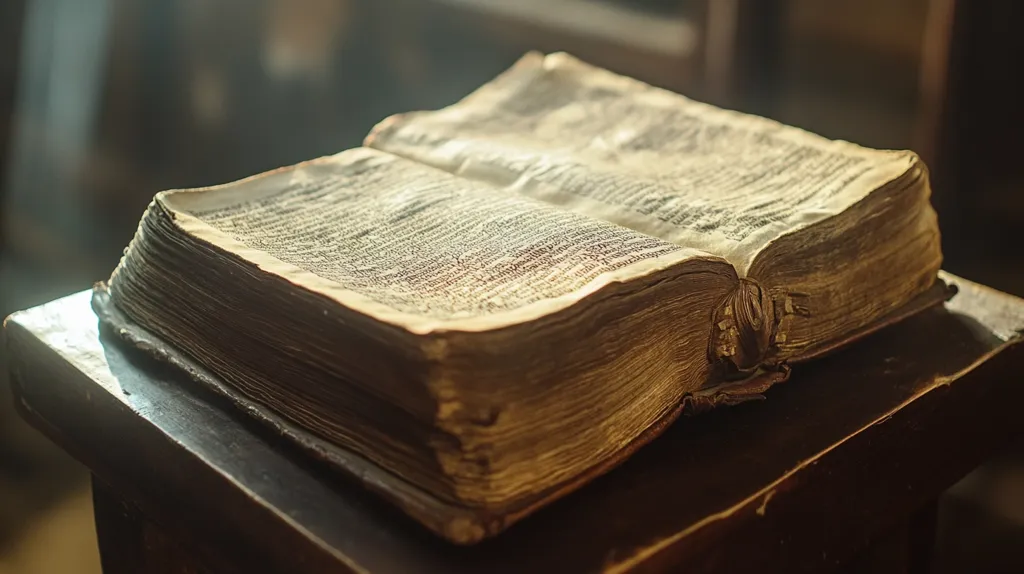
An old, leather-bound book lays open on a dark wooden table. The pages are yellowed and worn, suggesting a long history of use. The pages are filled with fine print, indicating a text of importance. The book's worn state adds to its mystique, hinting at the stories and wisdom it holds. Light from a window bathes the book in a warm glow, highlighting its age and significance.
The additional books in the Ethiopian Bible include texts like the Book of Enoch and the Book of Jubilees, which offer unique theological perspectives not found in other Christian traditions. These books provide alternative views on Christian beliefs, rituals, and spirituality--views that have enriched the faith of Ethiopian Christians for centuries. But these differences are precisely why the West has tried to suppress the Ethiopian Bible. It offers interpretations that challenge the Western version of Christianity, posing questions that many are not ready to answer. Before we delve deeper into the forbidden knowledge contained within this ancient text, let’s take a moment to understand why the Ethiopian Bible holds such power. Even the Vatican acknowledges that it is the oldest and most complete Bible in its original form--unchanged and untouched by later revisions. --ar 16:9